

The first steps
In 1999, the residents of Regent Park, Canada’s oldest public housing community, came together around a shared vision: that their young people would become the doctors, teachers, nurses and leaders the neighbourhood needed.
At the time, nearly three-quarters of Regent Park residents lived below the poverty line. The high school dropout rate was 56 per cent, twice the average for the City of Toronto. For the children of single parents and immigrants, it was more than 70 per cent.
“We wanted to break the cycle of poverty,” says Carolyn Acker, then Executive Director of the Regent Park Community Health Centre, which had long worked alongside residents to address some of their most pressing challenges. “The community told us, ‘If you want that vision to come true, you have to focus on two things: education and employment.”
Both Acker and Camille Orridge, then Board Chair of the Regent Park Community Health Centre, had navigated difficult circumstances growing up and had used education as a pathway to stable, well-paying careers. They knew that opportunity began with one critical milestone: graduating from high school.
"We made a decision," says Orridge. "We were going to get the kids through high school." But their goal reached beyond helping students earn a diploma—they wanted to prepare them to be the professionals and leaders of their community. "Our motto was that we should be replaced by the kids in the Park."

Building Pathways
To help define their next steps, Acker and Orridge enlisted education researcher Norman Rowen, who also had a background in community development.
“My job was to say, how do we turn this vision into something concrete, something that would actually benefit folks in the community?” says Rowen.
Through focus groups with young people, parents and educators, he learned about the challenges students were facing, including financial pressures at home, limited academic and social support, and teachers who often expected the worst from them. With no high school in Regent Park, students also had to travel outside the neighbourhood for school, and many struggled to afford the transit fare to get there.
Rowen worked with Toronto’s school boards to understand how many students were on track to graduate and how many were falling behind, focusing on the key metrics of attendance and credit accumulation.
He also looked at programs across North America to see what was working in other communities and what lessons might apply in Regent Park.
A simple realization emerged: no single intervention would be enough. If more young people were going to graduate, they would need comprehensive and consistent supports—academic, financial, social, and personal—throughout their high school years.
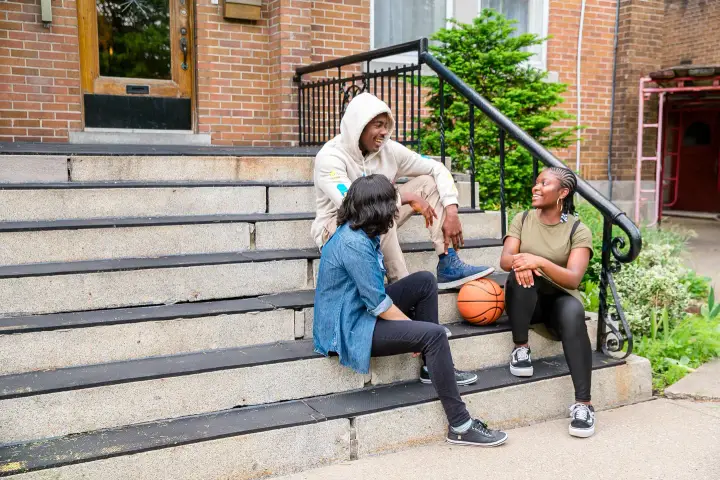
In 2001, the Pathways Program was founded and welcomed its first cohort of 100 Grade 9 students. They came for after-school snacks and stayed for tutoring. They picked up bus tickets to get to school, so the expense wouldn’t stand in their way. They spent time with friends and did homework in a safe, welcoming space. Above all, they found adult mentors who believed in them and a community where they felt they belonged.
“The kids who were part of Pathways began to unite as a group,” says Orridge. At a time when many young people faced pressure to join gangs, Pathways students navigated the neighbourhood together.

Five years later, the results were striking. The dropout rate had fallen by more than 70 per cent among students in the program. They were staying in school and going on to college and university in record numbers, with post-secondary participation increasing by more than 300 per cent.
As Pathways’ first Program Director, Rowen believes one innovation set the program apart.
“People used to ask, what’s the secret sauce? It was the relationships our staff built with students,” he says. Unlike other programs, Pathways employed staff who knew the students, knew the community, and understood the institutions they dealt with every day. They could step in quickly to mediate when challenges arose. That consistent presence of a trusted adult made all the difference.
“We learned that success comes from paying attention,” says Rowen, “from being emotionally present for the kids as much as physically present for them.”
From local impact to national reach
Pathways’ impact in Regent Park sparked interest across the country. Educators, community leaders, funders, and governments saw that, with equitable access to opportunity and resources, young people in low-income communities could overcome barriers to achievement.
“Developing Pathways required a strong commitment to social justice, because you just couldn’t give up,” says Acker. “There were so many obstacles, but we kept pushing forward because we believed the kids deserved a chance.”
In 2005, a new national organization, Pathways to Education Canada, was created to lead the expansion of the model, helping a growing number of communities adapt the program to meet the needs of local students.
Across Canada, 29 community organizations in 31 communities have embraced the Pathways Program. To date, more than 28,000 students have received support through the program. Pathways graduates have gone on to become doctors, teachers, skilled trades professionals, engineers, entrepreneurs, creative professionals, and social workers in their own communities—the very future imagined in Regent Park 25 years ago.

